IWD 2026 | Five perspectives on working in tech at Notitia
TL;DR: What is it like to build a career in data, design and technology in Australia? At Notitia, leaders across analytics, design and development share what they have learned about leadership, communication, confidence and solving the right problems. Their perspectives provide a practical view of what working in data and digital transformation actually looks like.
International Women’s Day is a moment that prompts reflection, but the strongest ideas shared by our team go well beyond one day on the calendar. Across recent contributed articles, five women from across Notitia reflected on what they have learned about leadership, design, confidence, communication and solving the right problem.
Their perspectives paint a clear picture of what working in technology actually looks like.
Good leadership starts with better questions
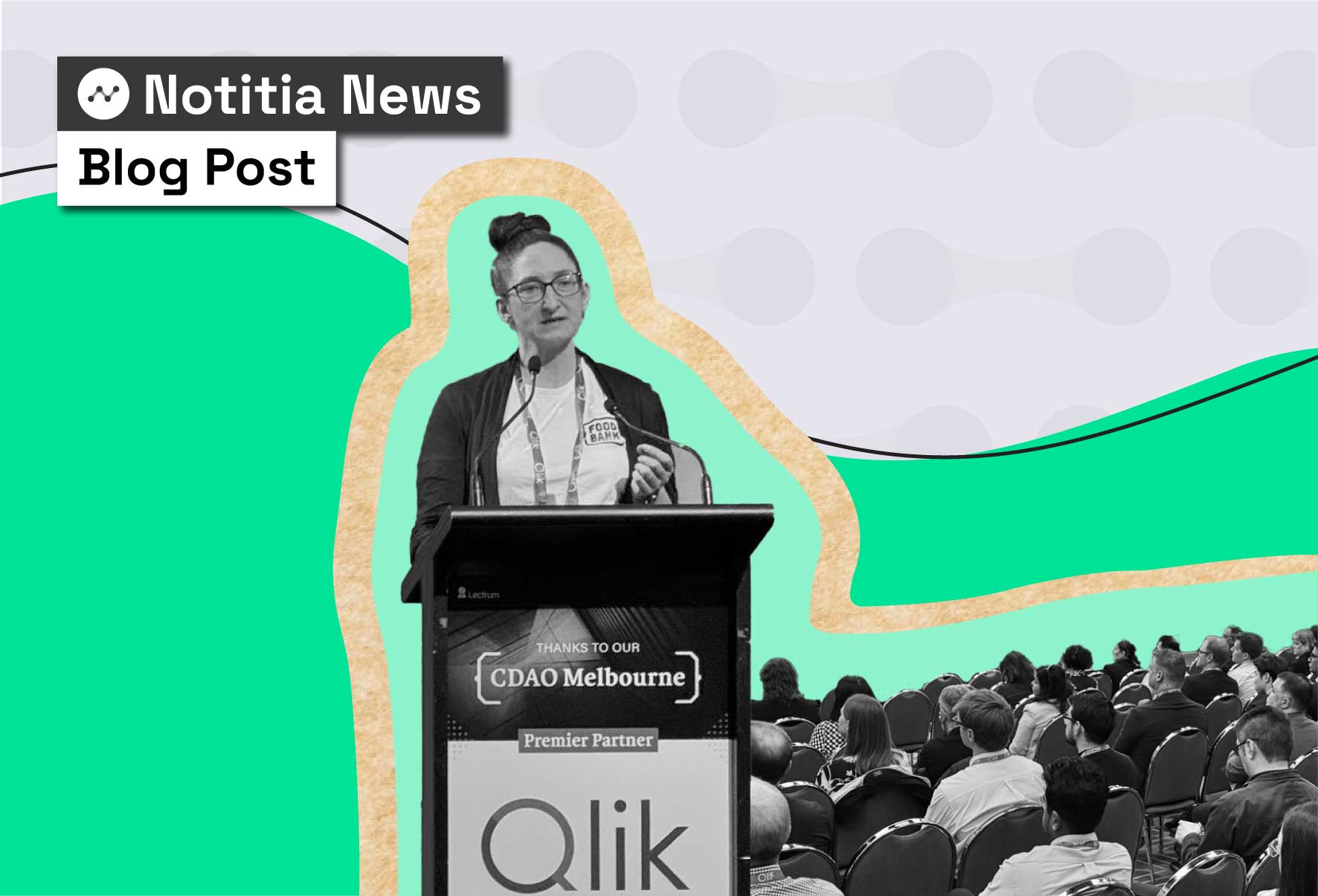
For Notitia Analytics Manager Louise Ayre, leadership in data and analytics is not about having a perfect answer ready at all times.
“Leadership in data and analytics is not about having all the answers, it is about asking the questions others hesitate to raise, so teams can tackle the real challenges with confidence," Louise tells TechDay Australia.
That mindset runs through how complex projects are managed. Rather than pushing past uncertainty, Louise points to the importance of surfacing assumptions early and making sure people are working from the same understanding.
“Misalignment is a far costlier problem than a moment of awkwardness.”
Her perspective is grounded in a career that has moved from automotive engineering in Canada, to major rail infrastructure projects in Melbourne, to senior leadership across digital, reporting and analytics projects at Notitia. That non-linear path has shaped a calm, practical leadership style built on clarity, context and support.
“When people have what they need, they perform.”
She also makes the case for addressing problems early, while there is still room to respond properly.
“Problems that get raised early stay manageable. As time passes, our options narrow.”
In other words, good technical leadership is not about ego or control. It is about creating the conditions for people to do their best work.
→ Read more: Meet the team, Senior Analytics Manager Louise Ayre
→ Read more: Lessons in data leadership by Louise Ayre
Good design starts with listening
“Design is about communicating clearly and solving a real problem for a real person," Carolina tells TechDay Australia.
That principle sits at the centre of her work as a Senior UX/UI Digital Designer, where projects span web applications, websites, portals and data products for Australian organisations.
Carolina argues that the most critical phase is the one where teams stop and properly understand what users are trying to solve.
“The empathising stage is the most important phase. You need to hear everything the client is saying to extract the main issues.”
That listening phase matters because clients do not always arrive with a neatly defined brief. Often, they come with symptoms, frustrations or disconnected requirements.
“Sometimes the biggest value we provide isn’t just the final product, it’s helping clients to articulate what they actually need.”
It is a strong reminder that good digital work is not just about interface decisions or aesthetics. It is about listening carefully enough to uncover the actual problem, then designing around real needs rather than assumptions.
→ Read more: Meet the team, Notitia UX/UI Digital Design Lead, Carolina Pérez Dilsizian
> Read more: Human Centred Design in Technology
Design thinking is about clarity, not just visuals
That same idea carries through Notitia's Desugner Yuri Chae’s reflections on “design thinking”.
“When people talk about design, they are often referring to just the visualisation. But before that, there’s ‘design thinking’ - understanding the client’s industry and business, identifying the real problem and explaining the reasoning behind your decisions," Yuri tells TechDay Australia.
Her perspective adds another layer to the discussion around human-centred design. Good design is not simply about making something look polished. It is also about building trust in the thinking behind the work.
“As a designer, how you present your work is very important. It’s not enough to show a design. You need to explain why it works.”
That confidence, she explains, develops over time. Earlier in her career, she describes herself as more passive, following direction from senior designers. Through experience, particularly at Notitia, that shifted into a more independent and proactive way of working.
“The key is not to impose ideas, but to communicate them clearly. It’s not about saying ‘this is better’. It’s about explaining the thinking behind it.”
This is especially important in technical environments where designers, developers, analysts and clients may all be approaching the same challenge from different angles.
“Design is not just about how something looks. It’s about narrowing the gap between different teams and helping everyone understand why something works.”
→ Read more: Meet the team, Notitia UX/UI Digital Designer, Yuri Chae
Confidence grows through doing
For Notitia Web Developer, Livia Gu, confidence in technology has little to do with knowing everything upfront.
“Confidence in technology is not about knowing everything, it’s about being willing to make mistakes, learn, and then solve the problems anyway," Livia tells TechDay Australia.
Her path into web development began while building a website for her photography business. What started as a challenge quickly became something more.
“When I started my photography business, I decided to build my own website instead of using a drag-and-drop tool. I thought it would be a fun challenge. I was Googling, watching YouTube, figuring it out bit by bit. During the process, I realised I was enjoying it too much.”
“I liked bumping into problems and solving them. That really triggered my interest.”
That mindset continues to shape how she works now as a Senior Web Developer. One of the biggest changes in her career has been moving from pure implementation into broader project ownership.
“I realised that development is not just sitting in a dark room doing your magic.”
“You have to think about the whole project. You have to step back and see the whole picture.”
That shift from simply building to thinking architecturally is a theme that shows up across the team’s reflections. Confidence is not about perfection. It is about perspective, accountability and being willing to keep learning.
“You don’t have to be perfect to contribute, especially in web development which is all about solving problems that people don’t always know the answer to.”
→ Read more: Meet the team, Notitia Web Developer, Livia Gu
Systems thinking matters in data work
Notitia Analytics Consultant, Jessica Molina Calabrese, brings another important thread into the conversation: systems thinking.
After building a global career across Argentina, the United States and Australia, her perspective on data and engineering has been shaped by a wide range of environments, industries and technical problems.
“Software engineering and data analytics are complementary. In both roles, you must deeply understand the requirements before building something useful," Jessica tells tells TechDay Australia.
That foundation informs how she now approaches data analytics work at Notitia, where she helps organisations transform complex data into practical, scalable solutions.
“Now I mostly work with data that helps clients make decisions for the future. We transform, model and visualise data so leaders can clearly understand what’s happening in their organisation.”
One of the clearest lessons from Jessica’s article is the importance of zooming out.
“Zooming out before diving in is critical.”
“Look at the bigger picture. Sometimes focusing on five per cent of the problem means you miss the other 95 per cent.”
That ability to step back, identify constraints early and communicate risks clearly is central to strong delivery in data projects, especially where timeframes are tight and dependencies shift.
“When you understand the tools and the data environment well, you can anticipate potential risks. That allows you to create workarounds early, or at least clearly communicate those risks at each stage of a project.”
→ Read more: Meet the team, Notitia Analytics Consultant, Jessica Molina Calabrese
Different backgrounds make better teams
These perspectives reflect something important about working in technology: strong teams are rarely made up of people who all think the same way.
There is no single path into technology. At Notitia, some began in engineering. Others started in graphic design and photography. Some arrive with a clear plan. Others find their way into the work by following curiosity, solving problems and learning as they go.
Across Notitia, that mix of backgrounds is one of the strengths of the team. It shapes how people think, how they communicate, and how they approach the real-world challenges clients bring to data, digital and design projects.
Read more about our team on Notitia's team page.
FAQs about careers in data and technology
What is it like to work in data and technology in Australia?
Working in data and technology involves solving complex problems, working across teams and using data to support decision-making across organisations.
What skills are needed for a career in analytics or data?
Key skills include problem solving, communication, systems thinking and the ability to work with data to generate insights.
What is human-centred design in technology projects?
Human-centred design focuses on understanding user needs before building solutions, ensuring technology solves real problems.
How do people build confidence in technology roles?
Confidence grows through experience, solving problems and learning from mistakes rather than knowing everything upfront.
What does a data leader do?
A data leader helps teams align, asks the right questions and ensures data is used effectively to support decisions.